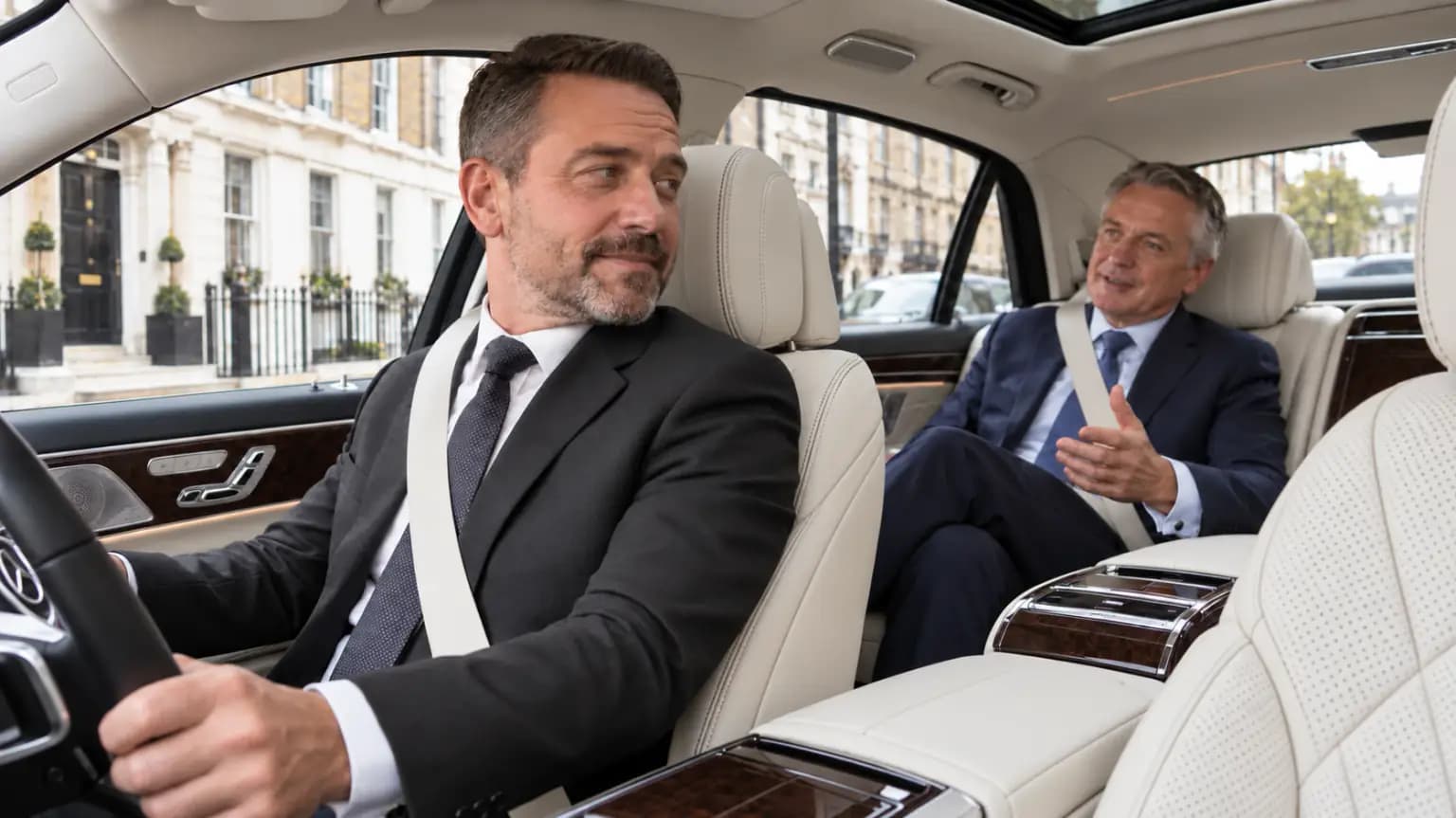
You do not have to keep a conversation going with your chauffeur, and you do not have to sit in silence either. A short hello and a clear plan for the journey are enough. After that, a professional chauffeur takes the lead from you: talk if you want to, or work, rest and put your headphones in. This guide explains how that works in a chauffeur car in the UK, what stays confidential, and how the tone changes from an airport collection to a day of meetings.
Should you talk to your chauffeur?
Yes, at the start. A greeting, your name if it has not already been confirmed, and the destination are the polite minimum. They also stop a wrong terminal, a wrong hotel entrance or a missed stop before the car moves.
After that, conversation is a choice, not a duty. Some passengers like a bit of company on a long run. Others have a call in ten minutes and want the cabin quiet. Neither is rude. The chauffeur's job is the journey: the route, the timing, the luggage and the door. Small talk is something they offer, then drop, once they can see what you prefer.
If you are booking for the first time, our guide to luxury chauffeur hire in the UK covers the vehicle, the booking and what the service includes. The notes below are about the conversation itself.
How does a chauffeur know whether you want to talk?
Most of it is ordinary. You answer in a few words, open a laptop, or put headphones in, and the chauffeur leaves you to it. You ask about the route, the area or how long the journey will take, and they stay with the conversation. You do not need a code or a special phrase.
It helps to say it plainly if the day is tight. "I'll be on calls most of the way" or "I'm happy to chat" is clearer than hoping the hint lands. Say it at the start of the journey, or add it to the booking, and the chauffeur can match you.
- A greeting, then a laptop or a headset, usually means you want quiet after the plan is confirmed.
- Questions about timing, the area or the vehicle usually mean you are happy to talk.
- A phone call or a meeting on speaker means the chauffeur should not join in, even if they can hear every word.
- "Could we stop?" or "Can we change the drop-off?" is a normal request, not an interruption.
The first few minutes
The opening minute does the useful work: who is collecting whom, where you are going, and whether anything has changed since the booking. An executive airport transfer is a typical case. The chauffeur already has the flight details. You may have a meeting straight after landing. Once that is settled, the rest of the journey can stay quiet.
Chauffeur: Good morning. Terminal 5, and the roads are clear, so about forty minutes. The airline and the drop-off door are confirmed.
Passenger: Thank you. I have a call at half past, so I'll be heads down most of the way.
Chauffeur: Of course. I'll keep it quiet unless the timing changes.
At arrivals, the same idea applies in reverse. You have just landed, you may not know which exit you are at, and the chauffeur is the person with your name. Confirm the plan before you start a longer conversation, especially if a colleague is being collected as well.
Chauffeur: Good afternoon. I'm here for the Mayfair hotel, and I have the name from the booking. Is it just you?
Passenger: Yes, just me. The case is the black one. I'd like a few minutes before we set off, if that's all right.
Chauffeur: Take your time. I'll load the case and we can leave when you're ready.
Quiet, busy, or happy to talk
Headphones are not rude. Say hello and confirm the plan first, then use them. The chauffeur will treat that as a request for quiet and will speak only if something needs a decision: a closure, a changed arrival time, or a question only you can answer.
Passenger: Morning. The city office, please. I'll put these in once we're moving.
Chauffeur: Morning. I'll only interrupt if the building's access changes. The radio stays off.
If you do want to talk, ordinary subjects are the easy ones: how long the journey should take, whether the evening event will run late, a restaurant near the hotel. You do not owe the chauffeur an account of the meeting, and a good chauffeur will not ask for one.
Passenger: We've got time, haven't we? I'd rather not rush the last half hour.
Chauffeur: We have. I'll keep to the main road unless it clogs. Are you being dropped at the front entrance or the side door?
Passenger: The front, please. And yes, I'm happy to chat if you are.
What stays confidential
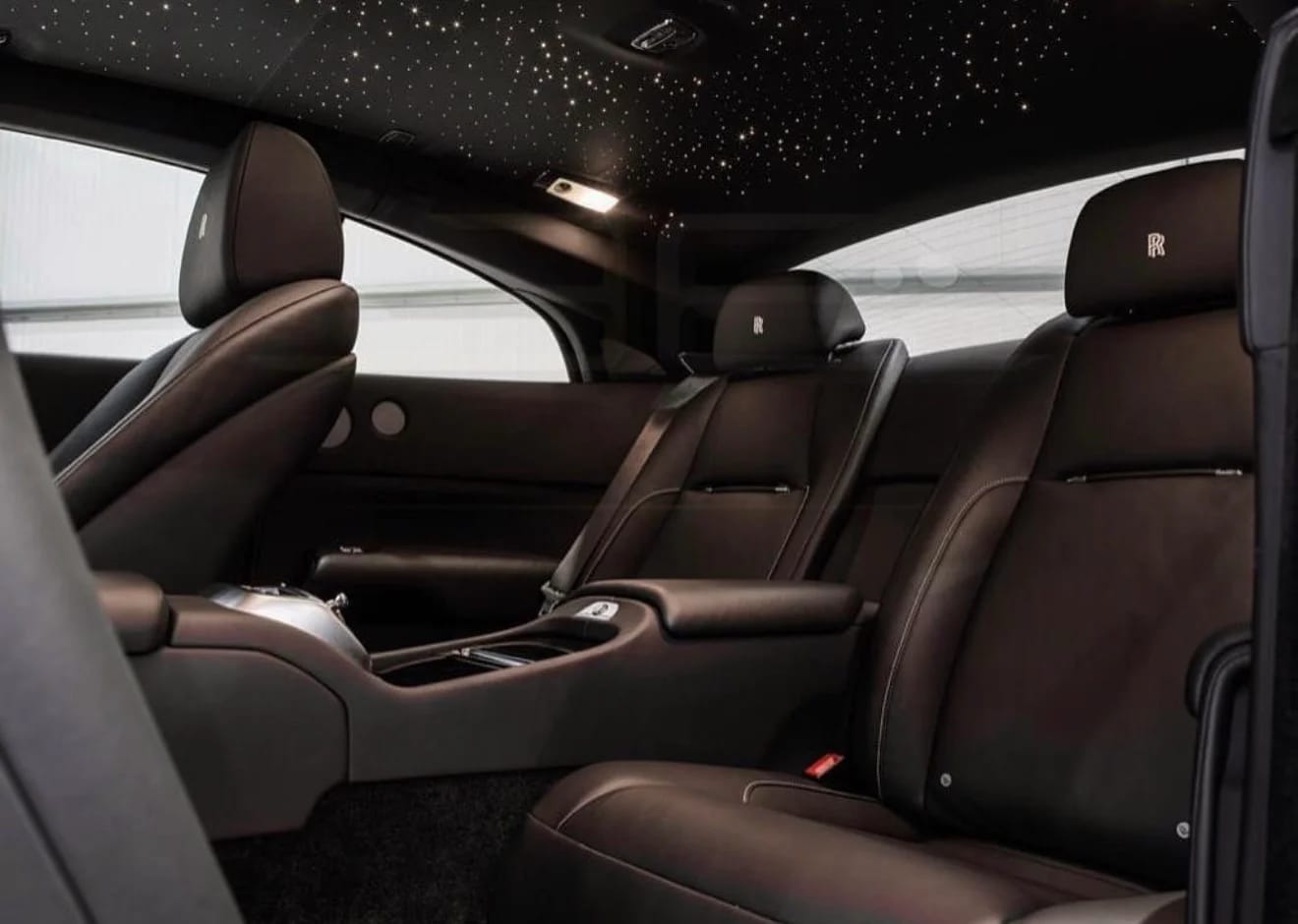
Treat the rear seat as a private room that happens to be moving. Calls, papers and conversations between colleagues stay in the car. The chauffeur can hear more than people expect, particularly on speaker, and the professional response is to hear it and not repeat it.
Passenger: I need to take this. It's about this afternoon's meeting, so I'll be a while.
Chauffeur: Go ahead. I'll keep the radio off and my eyes on the road. Nothing from the call is mentioned when it ends.
Passenger: Thank you. We may leave fifteen minutes early.
Chauffeur: I'll be outside. Tell me when you want the car brought round.
That standard matters most when the day itself is sensitive. On corporate and financial roadshows, the same chauffeur may sit outside several meetings and hear the gaps between them. A VIP and diplomatic chauffeur service is planned by a senior coordinator, with the protocol agreed before anyone is collected. BCT Luxury chauffeurs are DBS checked, and confidential work can be booked as an NDA-ready service.
If you need to change the plan
Ask. On an hourly or as-directed booking, a change of stop is part of the job. On a fixed transfer, an extra stop or a long detour may need a quick check against the booking, which is why it helps to mention known stops when you request the quote. You will not cause offence by asking.
Passenger: Could we collect a colleague from the station on the way? It wasn't on the original booking.
Chauffeur: Yes. I'll check it adds only a few minutes and let the desk know, so the arrival time stays honest.
Where you sit is the same kind of preference. Most passengers sit in the back, often on the rear nearside so they can step out onto the pavement. There is no rule that forbids the front if you prefer it, or if you are travelling with someone who needs the rear.
Passenger: Would you mind if I sat in the front? I get carsick in the back on this road.
Chauffeur: Not at all. I'll move the seat back. Tell me if you want the air turned up.
How the tone changes with the passenger
The chauffeur is adapting to the booking in front of them, not to a type pinned on you in advance. These are the patterns that come up most often, and what a professional response looks like.
| Situation | What you might do | What the chauffeur should do |
|---|---|---|
| Airport or first meeting | Keep the greeting short and check the destination | Confirm the plan, then leave space |
| Working in the back | Open a laptop or take a call | Keep the cabin quiet and interrupt only when needed |
| Happy to talk | Ask about the route or the timing | Converse, without asking what the meeting is about |
| Several passengers | Talk among yourselves | Stay out of the conversation unless addressed |
| As-directed day | Change the next stop as the diary moves | Confirm each change before setting off again |
Passenger: That's the last one. Straight to the hotel, please, and thank you for waiting out the overrun.
Chauffeur: Pleasure. I'll have you there in about twenty minutes. Same collection time in the morning?
Passenger: Yes. And I'll probably want it quiet again.
Request a chauffeur quote if you already know the date, the stops and whether you prefer a quiet car.
Say what you need when you book
The most useful note on a booking is a plain one: quiet car, happy to talk, a call at a set time, an extra stop, or a preference for the front seat. Our chauffeur services cover airport transfers, roadshows, as-directed hire and VIP movements, and the same point applies to all of them. The chauffeur can only follow a preference they have been told.
Food and a tip sit in the same practical category. A drink is generally fine. For food, ask first, particularly on a short transfer, and mention it at booking if you need to eat between meetings. Tipping in the UK is optional and not expected. If the service was excellent and you want to say thank you, do. On a corporate account, check first whether gratuities are already covered.
Request a tailored chauffeur quote, call +44 121 517 2474 or email info@bctcoachandchauffer.co.uk.
Written by: BCT Luxury Chauffeur Team
Last reviewed: October 2026